



In the expansive world of metallurgical engineering and structural design, selecting the right material is the foundational step for any successful project. Among the myriad of available options, the ST37 steel sheet stands out as an undisputed champion in the realm of non-alloy structural steels. Renowned for its unparalleled balance of strength, exceptional weldability, and economic viability, ST37 steel forms the backbone of modern infrastructure and industrial manufacturing.
Whether you are a structural engineer designing a high-rise framework, a procurement manager negotiating the best ST37 steel sheet price, or a heavy machinery manufacturer looking for reliable raw materials, understanding the nuanced behavior of this steel grade is critical.
In this comprehensive technical article, crafted specifically for the Parvan Steel Complex (parvanco.ir), we will conduct a deep dive into the ST37 technical specifications, analyze its chemical and mechanical properties, explore its broad industrial applications, and provide expert guidelines for fabrication.
What is ST37 Steel? Origins and Standards
To fully grasp the capabilities of the ST37 steel sheet, we must first look at its metallurgical origins and standard classifications. ST37 is a classic grade of low-carbon, non-alloy structural steel. Historically, it was defined under the highly respected German standard, the DIN 17100 standard, which governed technical delivery conditions for structural steels globally for decades.
Decoding the DIN 17100 Nomenclature
In the German engineering framework, the naming convention was highly practical:
- “ST” (Stahl): Translates directly to “Steel” in English, specifically denoting a general structural steel.
- “37”: Represents the approximate minimum ultimate tensile strength (UTS) of the material, measured in kgf/mm2kgf/mm^2kgf/mm2. This equates roughly to 360360360 to 370 MPa370 \text{ MPa}370 MPa.
While the most common historical designation was St37-2 (indicating a specific quality grade optimized for welding), global harmonization of engineering standards has shifted the terminology.
The Modern ST37 Steel Equivalent
Today, the DIN 17100 standard has been superseded by the European standard EN 10025-2. For engineers and procurement specialists looking for the exact ST37 steel equivalent in modern markets, the correct designation is S235JR.
- S: Structural Steel.
- 235: The minimum yield strength in Megapascals (235 MPa235 \text{ MPa}235 MPa) for nominal thicknesses up to 16 mm16 \text{ mm}16 mm.
- JR: Indicates an impact test (Charpy V-notch) requirement of 27 Joules27 \text{ Joules}27 Joules at room temperature (20∘C20^\circ \text{C}20∘C).
Other notable international equivalents include the American ASTM A36 and the Japanese JIS SS400. Despite these newer classifications, the term “ST37” remains deeply entrenched in the daily vocabulary of the Middle Eastern, Asian, and European steel markets.
Technical Specifications and Analysis of ST37 Steel Sheet
For structural engineers and metallurgists, data is everything. The reliability of an ST37 black steel sheet in a load-bearing application depends entirely on its precise chemical makeup and resulting mechanical behavior. Below is a detailed breakdown of the ST37 technical specifications.
ST37 Chemical Composition
The secret to ST37’s phenomenal workability lies in its carefully controlled chemical matrix. It is classified as a low-carbon steel (mild steel), which ensures that the material does not become brittle during welding or cold forming.
| Element | Symbol | Maximum Percentage (%) |
|---|---|---|
| Carbon | C | 0.170.170.17 |
| Silicon | Si | 0.400.400.40 |
| Manganese | Mn | 1.401.401.40 |
| Phosphorus | P | 0.0450.0450.045 |
| Sulfur | S | 0.0450.0450.045 |
Note: The exceptionally low levels of Phosphorus and Sulfur are critical, as higher concentrations of these impurities can lead to hot and cold shortness (cracking) during fabrication and welding.
ST37 Mechanical Properties
The ST37 mechanical properties dictate how the steel will behave under applied forces. It provides a generous margin of safety for general structural loads.
| Mechanical Property | Value Range | Unit |
|---|---|---|
| Ultimate Tensile Strength (RmR_mRm) | 360−510360 – 510360−510 | MPa\text{MPa}MPa |
| Yield Strength (ReHR_{eH}ReH) for thickness ≤16 mm\le 16 \text{ mm}≤16 mm | ≥235\ge 235≥235 | MPa\text{MPa}MPa |
| Yield Strength (ReHR_{eH}ReH) for thickness 16−40 mm16 – 40 \text{ mm}16−40 mm | ≥225\ge 225≥225 | MPa\text{MPa}MPa |
| Yield Strength (ReHR_{eH}ReH) for thickness 40−63 mm40 – 63 \text{ mm}40−63 mm | ≥215\ge 215≥215 | MPa\text{MPa}MPa |
| Elongation at Break (A5A_5A5) | ≥26\ge 26≥26 | %\%% |
Engineering Insight: The slight drop in yield strength as the thickness increases (e.g., in heavy 20−40 mm20 – 40 \text{ mm}20−40 mm plates) is a standard metallurgical phenomenon due to the slower cooling rates experienced at the core of thicker slabs during the hot rolling process.
Physical Properties
When performing finite element analysis (FEA) or manual load calculations, engineers rely on the following constant physical properties for ST37 steel:
- Density: 7.85 g/cm37.85 \text{ g/cm}^37.85 g/cm3 (or 7850 kg/m37850 \text{ kg/m}^37850 kg/m3)
- Modulus of Elasticity (Young’s Modulus): ≈200−210 GPa\approx 200 – 210 \text{ GPa}≈200−210 GPa
- Shear Modulus: ≈79−80 GPa\approx 79 – 80 \text{ GPa}≈79−80 GPa
- Poisson’s Ratio: 0.300.300.30
Key Advantages and Features of ST37 Steel
Why does the industrial world consume millions of tons of ST37 steel sheet annually? The answer lies in its multi-faceted advantages:
- Flawless Weldability: Thanks to its low carbon content, ST37 does not form brittle martensitic microstructures in the Heat Affected Zone (HAZ). This means it can be welded rapidly without the need for expensive pre-heating or post-weld heat treatment (PWHT).
- Exceptional Machinability and Formability: Whether it is rolling into cylinders, pressing into automotive parts, or CNC drilling, ST37 is soft enough to prevent excessive wear on tooling while maintaining structural integrity.
- Highly Economical Price Point: Because it does not require expensive alloying elements like Nickel, Chromium, or Molybdenum, the ST37 steel sheet price is highly competitive, making it the most cost-effective choice for large-scale projects.
- Universal Availability: It is a staple product for massive rolling mills worldwide, ensuring that procurement managers rarely face supply chain bottlenecks when sourcing this grade.
Broad ST37 Steel Applications in Various Industries
The versatility of this steel means that ST37 steel applications span almost every sector of heavy and light industry.
- Construction and Civil Engineering: ST37 is the lifeblood of infrastructure. It is heavily utilized in the fabrication of structural I-beams, H-columns, plate girders, space frames, and base plates. Heavy ST37 black steel sheets (such as the 20−40 mm20 – 40 text{ mm}20−40 mm plates produced by Parvan Steel) are essential for high-rise building foundations and bridge supports.
- Automotive and Transportation: While high-strength alloy steels are used for critical impact zones, ST37 remains a standard choice for heavy vehicle chassis, truck beds, railcar frames, and agricultural machinery components due to its fatigue resistance and formability.
- Heavy Machinery and Equipment Manufacturing: The base frames, housings, and protective guards of industrial equipment (like CNC machines, generators, and industrial presses) are predominantly constructed from precisely cut and welded ST37 plates.
- Pipes, Tubes, and Profiles: Millions of kilometers of welded steel pipes (used for water transmission, low-pressure gas, and structural scaffolding) are rolled and seam-welded from ST37 coils.
Technical Comparison: The ST37 vs ST52 Difference
One of the most frequent questions posed by project managers and junior engineers is regarding the ST37 vs ST52 difference. While both originate from the DIN 17100 standard and are non-alloy structural steels, they serve fundamentally different engineering purposes.
ST52 (modern equivalent: S355JR) is a higher-grade structural steel. Here is a definitive metallurgical comparison:
1. Strength and Load Capacity
- ST37 (S235JR): Offers a minimum yield strength of 235 MPa235 \text{ MPa}235 MPa. It is designed for general-purpose load bearing where extreme stresses are not present.
- ST52 (S355JR): Offers a minimum yield strength of 355 MPa355 \text{ MPa}355 MPa. It is specifically engineered for heavy-duty applications like offshore platforms, towering cranes, and heavy-load bridges.
2. Carbon Equivalent Value (CEV) and Weldability
Weldability in metallurgy is mathematically estimated using the Carbon Equivalent Value formula:
CEV=C+Mn6+Cr+Mo+V5+Ni+Cu15 CEV = C + \frac{Mn}{6} + \frac{Cr + Mo + V}{5} + \frac{Ni + Cu}{15} CEV=C+6Mn+5Cr+Mo+V+15Ni+Cu
- ST37: Has a distinctly lower carbon and manganese content (max 0.17% C0.17\% \text{ C}0.17% C and 1.40% Mn1.40\% \text{ Mn}1.40% Mn), resulting in a low CEV. It is universally weldable without pre-heating.
- ST52: Contains higher carbon (up to 0.20%0.20\%0.20%) and manganese (up to 1.60%1.60\%1.60%) to achieve its higher strength. Consequently, its higher CEV means that welding thick sections of ST52 strictly requires pre-heating to avoid hydrogen-induced cold cracking.
3. Economic Implications
Due to the additional manganese and stricter rolling controls, ST52 is more expensive. Engineers must calculate whether the weight reduction achieved by using stronger, thinner ST52 offsets its higher initial cost compared to the highly economical ST37 steel sheet price.
Comprehensive Guidelines for ST37 Sheet Welding, Cutting, and Forming
To maximize the potential of your raw materials, adhering to correct fabrication practices is essential.
ST37 Sheet Welding
ST37 sheet welding is considered highly forgiving. It is compatible with all major commercial arc welding processes:
- SMAW (Stick Welding): Standard E6013 electrodes are perfect for general fabrication, while E7018 (low-hydrogen) is recommended for high-stress structural joints.
- GMAW (MIG/MAG): Uses ER70S-6 solid wire with an Ar/CO2Ar/CO_2Ar/CO2 shielding gas mixture for high-speed, clean welds.
- FCAW (Flux-Cored): Ideal for outdoor structural welding where wind might disrupt shielding gas.
Cutting Procedures
ST37 black steel sheet can be aggressively cut using multiple methods. For thin sheets, mechanical shearing is efficient. For thick plates (like the 20−40 mm20 – 40 text{ mm}20−40 mm range), Oxy-fuel cutting or CNC Plasma cutting yields excellent results. Laser cutting is also highly effective for precision parts up to 25 mm25 \text{ mm}25 mm, leaving a clean edge that requires zero post-machining.
Cold Forming
ST37 exhibits excellent ductility. When cold-rolling or press-braking the sheet, engineers should observe a minimum inner bend radius of roughly 1.51.51.5 to 222 times the material thickness for thinner sheets, expanding to larger radiuses for thicker plates to prevent outer-fiber micro-cracking.
Buy Premium ST37 Steel Sheet from Parvan Steel Complex
When industrial projects demand unwavering reliability, the origin of your steel matters. The Parvan Toos Steel Complex stands as a monumental pillar in the Middle Eastern steel industry, engineered to meet the massive demands of the domestic market and high-volume international exports.
A Legacy Built on Quality and Capacity
Initiated on September 9, 2022, and sprawling across a massive 210,000 square meter210,000 \text{ square meter}210,000 square meter facility located on the strategic Torbat Heydarieh to Gonabad transit route (Mahvelat Industrial Zone), Parvan Steel represents the pinnacle of modern steel manufacturing. By October 2025, the complex proudly reached its operational Phase 1 milestone.
Phase 1 Capabilities (Currently Operational):
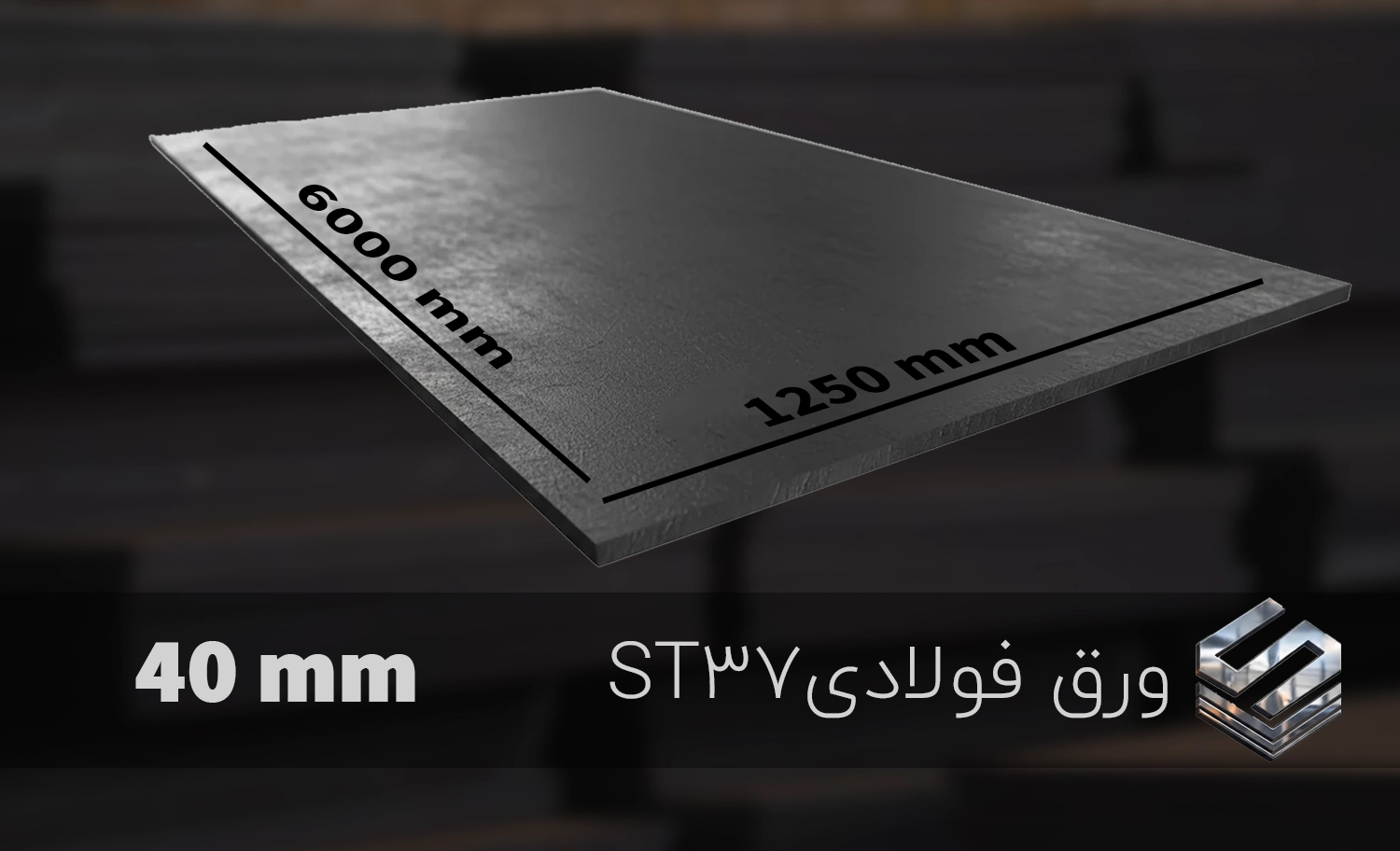
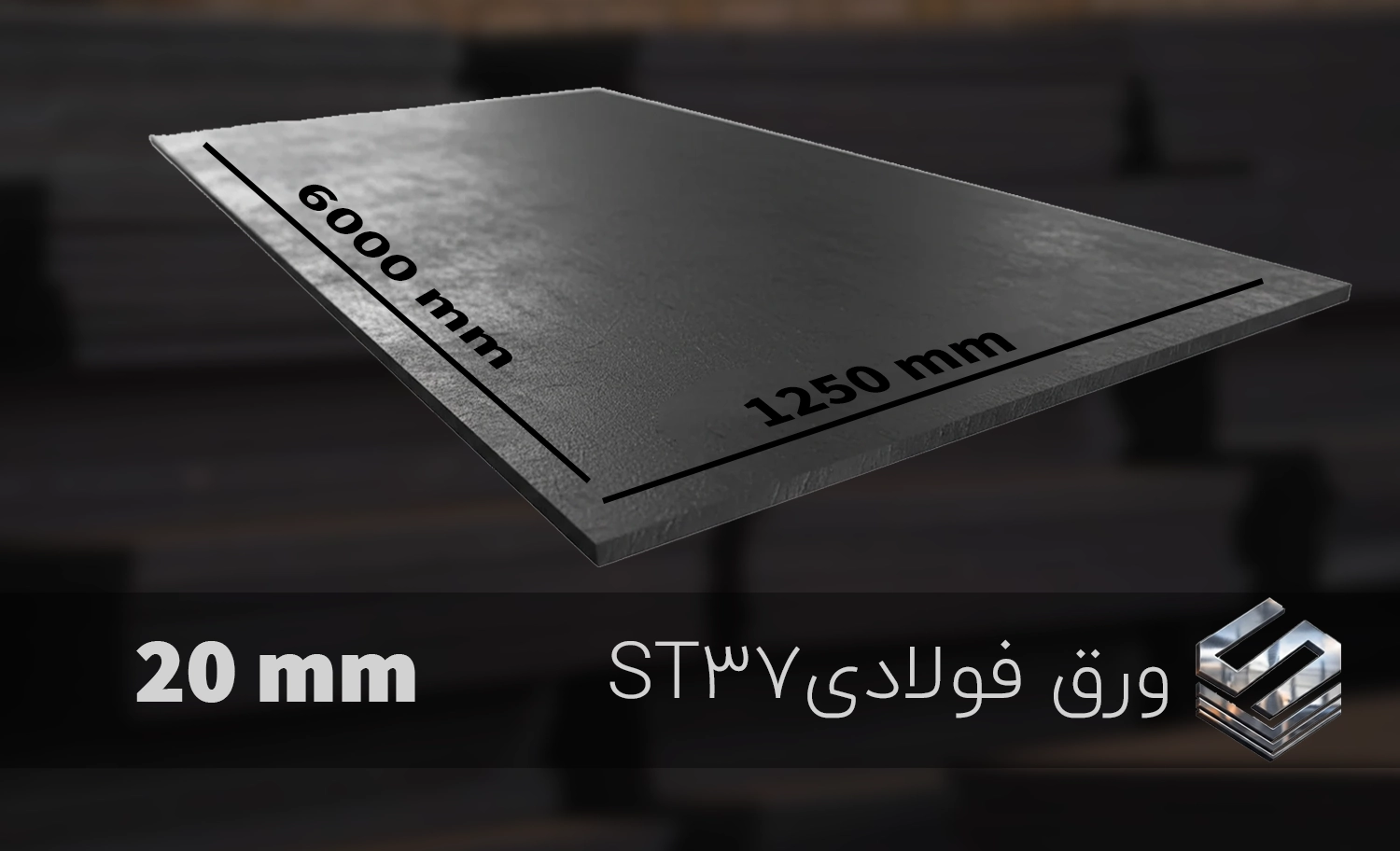
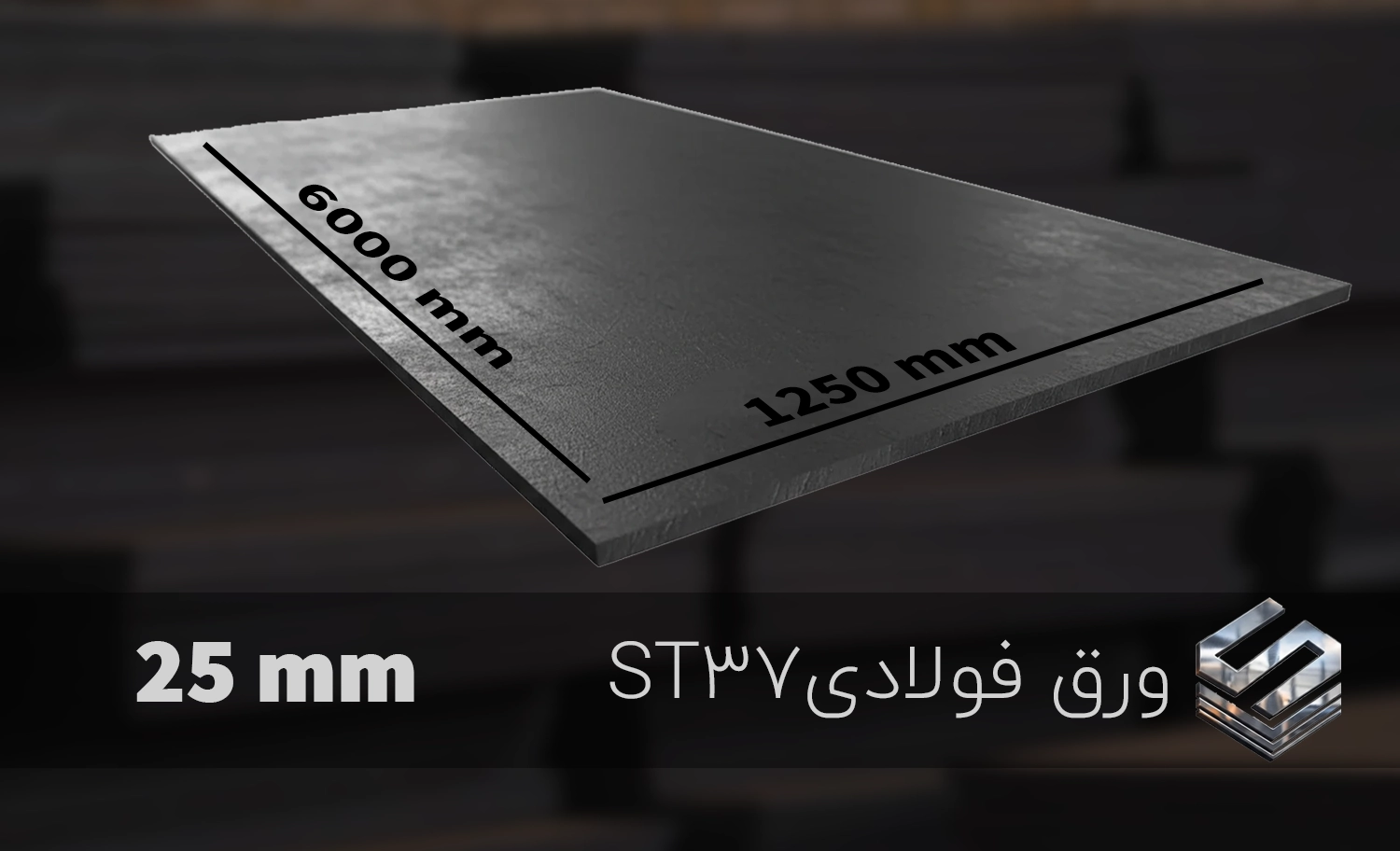
Through our state-of-the-art slab rolling processes, we currently possess the capacity to produce 150,000 tons of premium carbon steel sheets annually. Our current primary output features heavy-duty ST37 black steel sheets with highly sought-after dimensions:
- Thickness: 20 mm20 \text{ mm}20 mm to 40 mm40 \text{ mm}40 mm
- Width: 1250 mm1250 \text{ mm}1250 mm
- Length: 6000 mm6000 \text{ mm}6000 mm (Supplied in standard sheets)
Phase 2 Expansion (The Future):
Committed to relentless growth, our Phase 2 development will double our capacity by adding another 150,000 tons of production line dedicated to precise, thinner gauges ranging from 8 mm8 \text{ mm}8 mm to 15 mm15 \text{ mm}15 mm thickness, perfectly catering to intricate construction and manufacturing needs.
Why Choose Parvan Steel?
Parvan Steel Complex was not just built to manufacture steel; it was built to cultivate regional prosperity. By prioritizing the employment of top-tier local metallurgical engineers, skilled technicians, and dedicated workers from within the province, we ensure meticulous quality control at every stage of production.
If you are seeking the most competitive ST37 steel sheet price without compromising on standardized mechanical properties, look no further. Our sheets come with comprehensive Mill Test Certificates (MTC) guaranteeing chemical and structural integrity.
Contact the engineering and sales team at Parvan Steel Complex today to request a quote, secure your supply chain, and build your next mega-project on a foundation of unyielding quality.
Final Conclusion
The ST37 steel sheet is much more than a simple piece of metal; it is the fundamental building block of modern civilization. Characterized by its DIN 17100 origins and known globally today as S235JR, its unique blend of low carbon content, exceptional weldability, impressive ductility, and low cost makes it irreplaceable in construction, automotive, and heavy machinery industries. While high-strength alternatives like ST52 exist for specialized heavy-load applications, ST37 remains the undisputed go-to material for general structural fabrication. By sourcing from a state-of-the-art facility like the Parvan Steel Complex, engineers and buyers guarantee that their projects are reinforced with world-class quality and reliability.
Frequently Asked Questions (FAQ) About ST37 Steel
1. Is ST37 steel sheet suitable for use in extremely cold environments?
Yes, but with caveats. Under its modern equivalent name, S235JR, the “JR” indicates that the steel has passed a Charpy V-notch impact test, absorbing at least 27 Joules27 \text{ Joules}27 Joules of energy at room temperature (20∘C20^\circ \text{C}20∘C). For extreme sub-zero environments, engineers typically upgrade to S235J0 (tested at 0∘C0^\circ \text{C}0∘C) or S235J2 (tested at −20∘C-20^\circ \text{C}−20∘C) to prevent brittle fracture.
2. How can I verify the authenticity and quality of an ST37 black steel sheet?
The most reliable method is to request a Mill Test Certificate (MTC) from the manufacturer (such as Parvan Steel Complex) upon delivery. The MTC provides the exact heat number, chemical composition analysis (confirming low Carbon and Manganese), and the results of mechanical tensile and yield tests performed in the factory’s metallurgical laboratory.
3. Why is ST37 preferred over higher-grade steels like ST52 for general construction?
It comes down to cost-efficiency and fabrication speed. ST37 provides a highly economical ST37 steel sheet price relative to its strength. Furthermore, its lower Carbon Equivalent Value (CEV) allows welders to work faster without the strict pre-heating protocols required by higher-grade steels like ST52, drastically reducing labor costs and fabrication time on the construction site.